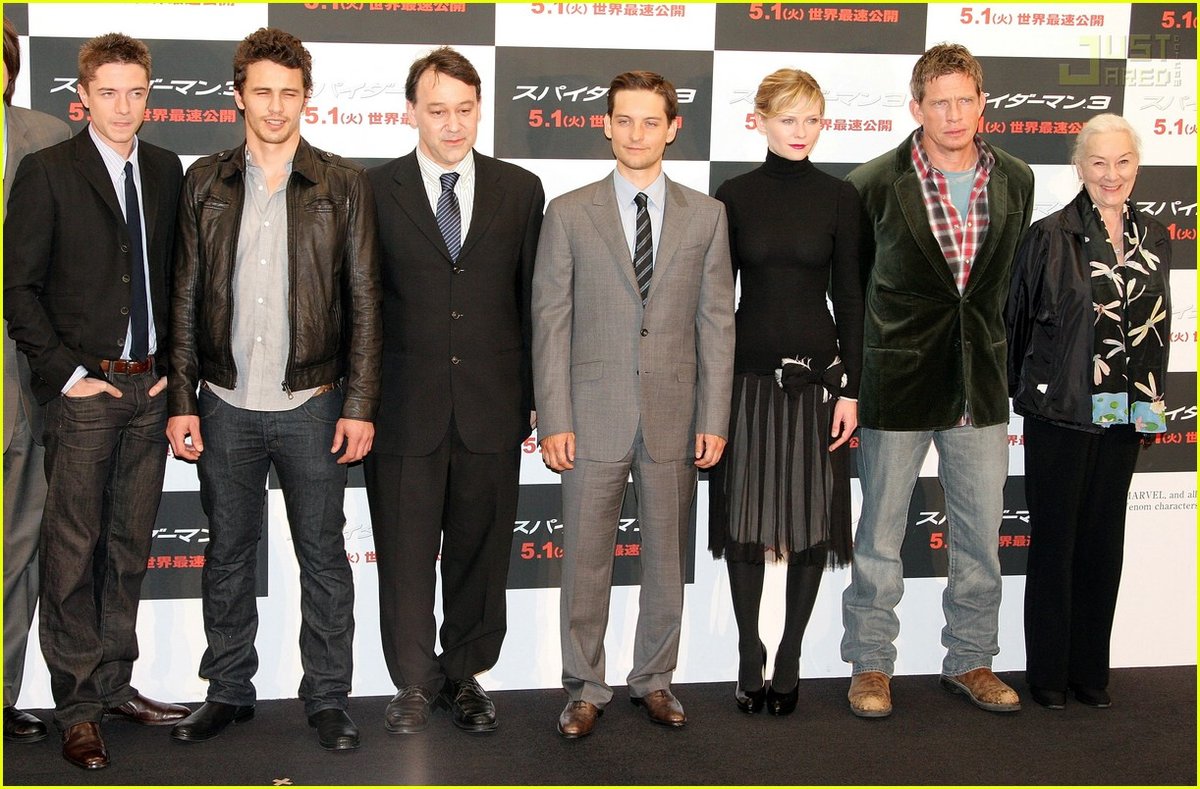
Remember the palpable excitement, the weight of expectation, and then the wildly mixed reactions surrounding Spider-Man 3? For many, the film, while still an undeniable spectacle, felt like a complex beast, juggling too many villains and tonal shifts. Yet, behind the scenes, the cast and crew poured their hearts and souls into what they believed would be the grand culmination of a beloved trilogy. Diving into the Spider-Man 3 Cast & Crew On-Set Stories & Interviews reveals a fascinating journey of creative ambition, immense pressure, and heartfelt performances that shaped a truly unique entry in superhero cinema.
Long before the internet memes and critical dissections, there was a passionate group of filmmakers and actors grappling with the challenge of delivering a satisfying conclusion to one of the most successful superhero sagas ever. Their experiences, from the joys of collaboration to the frustrations of creative compromise, paint a vivid picture of a blockbuster in the making.
At a Glance: Behind the Scenes of Spider-Man 3
- Immense Pressure: Following two critically and commercially successful films, the cast and crew faced sky-high expectations for the trilogy's finale, which led to significant creative challenges.
- Navigating Complexity: Director Sam Raimi, initially hesitant about Venom, found himself balancing multiple iconic villains—Sandman, Venom, and the New Goblin—alongside deep character arcs.
- Emotional Depth: Actors like Tobey Maguire, Kirsten Dunst, and James Franco leaned into the heavy emotional weight of their characters' evolving relationships and personal struggles.
- The "Emo Peter" Phenomenon: Maguire's portrayal of Peter Parker under the Symbiote's influence sparked widespread discussion and provided some of the film's most memorable, if divisive, moments.
- Dedication to Craft: Thomas Haden Church committed to a nuanced portrayal of Sandman, while Bryce Dallas Howard embraced her role as the charming but disruptive Gwen Stacy.
- Studio Influence: Creative differences and studio demands, particularly regarding the inclusion of Venom, significantly impacted the final cut and Raimi's vision.
- Unsung Heroes: The massive visual effects and stunt teams worked tirelessly to bring the film's ambitious action sequences to life, often pushing the boundaries of what was possible at the time.
The Weight of Expectation: Concluding a Beloved Trilogy
By 2007, Sam Raimi's Spider-Man franchise wasn't just a series of successful movies; it was a cultural phenomenon. Spider-Man (2002) redefined the superhero genre for a new generation, and Spider-Man 2 (2004) is still widely regarded as one of the greatest superhero films ever made. So, when it came to Spider-Man 3, the bar wasn't just high; it was in orbit. This immense pressure colored every aspect of production, from the screenplay by Alvin Sargent, Ivan Raimi, and Sam Raimi, to the performances of its returning stars.
Tobey Maguire, who had become synonymous with Peter Parker, spoke frequently about the challenge of evolving his character. Peter was no longer just the awkward high schooler; he was a confident hero, but one still grappling with loss and the complexities of his dual life. The black suit storyline, which explored Peter's darker side, was a particularly demanding arc for Maguire, requiring him to delve into an uncharacteristic arrogance and aggression. It was a stark departure from the earnest, often angst-ridden hero fans knew, and Maguire committed fully to the transformation, even if the "Emo Peter" dance scene later became a point of internet fascination.
Kirsten Dunst, returning as Mary Jane Watson, also faced a character arc filled with turmoil. MJ's career struggles and her relationship with Peter were at an all-time low, making her journey through the film particularly emotionally taxing. Dunst often discussed the difficulty of portraying a character who felt increasingly sidelined and frustrated, providing a grounded counterpoint to Peter's escalating powers and hubris.
A Web of New Characters: Expanding the Universe
One of Spider-Man 3's most ambitious undertakings was the introduction of multiple new key characters, each bringing their own challenges and contributions to the narrative tapestry. Thomas Haden Church as Sandman, Topher Grace as Venom, and Bryce Dallas Howard as Gwen Stacy significantly expanded the world of Peter Parker.
Thomas Haden Church: Grounding the Shifting Sands of Flint Marko
The casting of Thomas Haden Church as Flint Marko, also known as Sandman, was a stroke of genius that often goes underappreciated amidst the film's other complexities. Church brought a gravitas and tragic humanity to the character that elevated him beyond a typical comic book villain. In interviews, Church shared his deep dive into the character's motivations, focusing on Marko's desperation to save his sick daughter. This human-first approach informed his entire performance.
"He's not a bad guy; he's just a guy who makes bad choices out of desperation," Church often explained, highlighting his efforts to portray Sandman as a sympathetic figure rather than pure evil. Director Sam Raimi championed this nuanced take, allowing Church to explore the emotional weight of Marko's powers and actions. On set, his dedication was evident, particularly during the intense motion-capture work required to bring Sandman's shifting form to life. It was a blend of old-school acting and cutting-edge visual effects, a testament to the film's technical ambition.
Topher Grace: The Controversial Choice for Venom
Perhaps no casting decision in Spider-Man 3 generated as much discussion—and later, criticism—as Topher Grace taking on the role of Eddie Brock and Venom. Grace, known primarily for comedic roles in That '70s Show, was an unexpected choice for the monstrous symbiote. The decision was largely a studio mandate, as Sam Raimi himself admitted he wasn't keen on including Venom, preferring other villains like The Vulture.
Grace approached the role with enthusiasm, however. He spoke about bulking up for the part and embracing the darker, more aggressive nature of Eddie Brock. He understood the fan expectations, acknowledging the difficulty of portraying such an iconic character in a limited screen time. Despite the polarizing reception, Grace delivered a performance that, for better or worse, embodied the film's struggle to balance its various elements. The on-set dynamic of creating Venom was a mix of intense practical effects for Brock's physical transformation and advanced CGI for the full Venom suit, a process that demanded adaptability from Grace.
Bryce Dallas Howard: Stepping into Gwen Stacy's Shoes
Bryce Dallas Howard joined the cast as Gwen Stacy, a character crucial to Spider-Man lore, and one who immediately adds a new layer of romantic tension for Peter Parker. Howard, known for her vibrant presence, brought a fresh energy to the set. She discussed the pressure of introducing such an iconic character, especially knowing the ultimate fate of Gwen Stacy in the comics.
Howard relished the opportunity to play a character who was both intelligent and charming, but also inadvertently became a catalyst for conflict between Peter and MJ. Her performance offered a glimpse into an alternative life for Peter, adding complexity to his already strained relationship with Mary Jane. The stunt work, particularly the infamous falling crane scene, was a significant challenge, with Howard bravely performing many of her own stunts, demonstrating her commitment to the role.
Behind the Mask: Tobey Maguire's Evolving Spider-Man
Tobey Maguire's portrayal of Peter Parker and Spider-Man was the bedrock of the trilogy. In Spider-Man 3, he faced his most challenging arc yet, as Peter grappled with the black symbiote suit's corrupting influence. This period saw Peter's confidence turn into arrogance, his heroism into exhibitionism, and his gentle nature into aggression.
Maguire spoke at length about the deliberate choice to show Peter's descent. He worked closely with Sam Raimi to chart the emotional beats of this transformation, from the subtle shift in his walk to the infamous jazz club dance scene. That particular sequence, often dubbed "Emo Peter," was designed to showcase Peter's newfound, misguided confidence and his attempt to make MJ jealous. While it became a polarizing moment for fans, Maguire and Raimi intended it to be a visual representation of the symbiote's intoxicating power, making Peter behave in ways entirely uncharacteristic of his true self. It was an awkward, deliberate choice to highlight his moral corruption.
The Heart of the Story: Dunst, Franco, and the Emotional Core
Beyond the spectacular action and new villains, Spider-Man 3 was always meant to be a deeply emotional film, exploring the complex relationships between Peter, Mary Jane, and Harry Osborn. Kirsten Dunst and James Franco, reprising their roles, delivered some of their most poignant performances.
Kirsten Dunst's Mary Jane Watson endures immense professional and personal hardship in this installment. Her struggling Broadway career and the constant strain of Peter's double life lead to significant emotional distress. Dunst openly discussed the difficulty of playing MJ at such a low point, feeling disconnected from Peter and wrestling with her own insecurities. She portrayed MJ's vulnerability and frustration with raw honesty, making her struggles feel palpable and relatable, a stark contrast to Peter's growing self-absorption.
James Franco's Harry Osborn completed his tragic arc in Spider-Man 3, evolving from vengeful New Goblin to Peter's ally and ultimately, a sacrificial hero. Franco, who had been with the series since the beginning, poured his heart into Harry's journey, which was riddled with amnesia, manipulation, and ultimately, redemption. The fight sequences between Harry and Peter were not just physical; they were intensely emotional, representing the deep bonds of friendship and rivalry. Franco's performance in Harry's final moments on screen was particularly moving, bringing a powerful, heartbreaking conclusion to his character's saga. These character-driven moments often served as the film's anchor amidst the escalating chaos.
Directing the Chaos: Sam Raimi's Vision and the Studio Struggle
Sam Raimi, the visionary director who brought Spider-Man to life, found himself in a particularly challenging position with Spider-Man 3. Having helmed two universally praised films, he was under immense pressure to deliver an even bigger and better finale. However, this film became a battleground of creative differences, particularly concerning the number of villains.
Raimi had initially envisioned a simpler story, potentially focusing on Sandman and the New Goblin. He famously expressed his disinterest, and even dislike, for the character of Venom. However, producers, including Avi Arad, and studio executives insisted on Venom's inclusion, believing the character was a major fan favorite and a box office draw. This mandate forced Raimi and his writing team to shoehorn Venom into an already crowded narrative, contributing significantly to the film's perceived bloat.
In later interviews, Raimi openly admitted to the difficulties and frustrations he experienced during the production of Spider-Man 3. He often spoke about losing his way, trying to satisfy too many voices, and not having the same singular vision he had for the previous films. This candidness reveals the immense pressure blockbuster filmmaking can exert on even the most talented directors. For a deeper look into the intricate details and challenges that defined the production, you might want to delve into the nuts and bolts of Spider-Man 3's production process. Understanding these behind-the-scenes struggles offers crucial context to the film's final form.
Crafting the Spectacle: VFX, Stunts, and the Unseen Heroes
Behind every gravity-defying swing, every shattering building, and every shifting sand effect in Spider-Man 3 was an army of dedicated crew members. Director of Photography Bill Pope crafted the film's stunning visuals, from the bustling streets of New York to the intimate character moments. His collaboration with Sam Raimi ensured a consistent visual language that felt both grand and grounded.
The visual effects, supervised by Scott Stokdyk, Sheena Duggal, and PeiPei Alena Yuan, were a monumental undertaking. Bringing Sandman to life required groundbreaking CGI that blended seamlessly with Thomas Haden Church's motion-capture performance. Venom's design and animation were meticulously crafted to be both terrifying and agile. The sheer scale of destruction, especially during the final battle, pushed the boundaries of what was achievable in visual effects at the time. It was a painstaking process of pre-visualization, digital sculpting, and rendering, often involving thousands of artists working across multiple studios. If you're curious about how the entire Spider-Man 3 filming process unfolded, especially its technical challenges, it's a testament to the crew's relentless innovation.
Stunt Coordinator Dan Bradley orchestrated the film's elaborate action sequences, ensuring both safety and spectacle. From Spider-Man's intricate web-slinging maneuvers to the brutal aerial dogfights between Spider-Man and New Goblin, the stunt team executed breathtaking choreography. Actors like Tobey Maguire and James Franco often performed portions of their own stunts, adding authenticity to the combat. The iconic crane rescue sequence involving Gwen Stacy, for instance, required precise coordination between practical effects, wire work, and visual effects to create its dizzying height and dramatic tension.
The Unforgettable Cameos and Supporting Players
No Spider-Man film is complete without its iconic supporting cast, and Spider-Man 3 brought back beloved characters who added depth and humor to the saga.
- J.K. Simmons as J. Jonah Jameson: Simmons once again stole every scene he was in, delivering his signature bombastic performance as the Daily Bugle editor. His unyielding disdain for Spider-Man and his comedic timing provided much-needed levity amidst the film's darker themes. His ad-libs and sheer commitment to the character made him a fan favorite from day one, and his presence was a constant, hilarious highlight.
- Rosemary Harris as Aunt May: Harris's portrayal of Aunt May continued to be the emotional anchor of Peter's life. Her quiet wisdom, unconditional love, and gentle guidance offered Peter moments of solace and clarity. The scenes between Peter and Aunt May often served as poignant reminders of his core values, grounding him when the symbiote threatened to consume him.
- Willem Dafoe as Green Goblin / Norman Osborn: Even after his apparent death in the first film, Willem Dafoe's Norman Osborn made impactful appearances, haunting Harry and pushing him towards his destiny as the New Goblin. Dafoe's chilling voice and intense presence underscored the lasting trauma of Harry's past, reminding audiences of the trilogy's enduring villainous legacy.
- Stan Lee as Man in Times Square: The legendary Stan Lee made his traditional cameo, offering a knowing glance and a profound line to Peter Parker: "You know, I guess one person can make a difference. 'Nuff said." It was a classic Stan Lee moment, injecting a meta-commentary and a dose of heartfelt wisdom into the film.
- Joe Manganiello as Flash Thompson: Flash Thompson's brief return at Harry's funeral offered a full-circle moment for Peter, showing how much both characters had matured since their high school rivalry. It was a subtle nod to the origins of Peter Parker's journey.
These performances, whether brief or extensive, showcased the incredible ensemble talent that Sam Raimi assembled for his trilogy, ensuring that even the smallest roles resonated with the audience.
Reflections from the Set: Legacy and Lessons Learned
Looking back, the cast and crew of Spider-Man 3 have offered varied but consistently honest reflections on the film. Sam Raimi, in particular, has been very open about his struggles, stating in later interviews that he regrets not having a stronger vision for the film and trying to appease too many different demands. His candidness has resonated with fans and fellow filmmakers, highlighting the pressures inherent in major studio productions.
Tobey Maguire has often expressed gratitude for the experience, acknowledging the film's divisive reception but emphasizing the effort and passion that went into it. He spoke about the collaborative spirit on set, even amidst the challenges, and the unique bond formed with his co-stars. Kirsten Dunst and James Franco have also reflected on the emotional intensity of their roles, particularly the satisfaction of bringing their characters' complex arcs to a conclusion.
While Spider-Man 3 is often cited as the weakest of Raimi's trilogy, it's also recognized for its ambitious scope, groundbreaking visual effects, and moments of genuine emotional impact. The creative struggles behind the scenes ultimately became part of its story, offering valuable insights into the compromises and challenges of filmmaking on such a grand scale. To understand more behind-the-scenes details about the extensive Spider-Man 3 filming schedule and production choices, exploring additional crew perspectives can offer a clearer picture of the magnitude of the endeavor.
Beyond the Credits: The Enduring Impact of a Complex Legacy
Spider-Man 3 remains a fascinating case study in blockbuster filmmaking. It was a film born of immense success, burdened by colossal expectations, and ultimately shaped by a blend of artistic vision and commercial pressures. The on-set stories and interviews from its cast and crew offer a vital window into this complex production, revealing the human effort behind every frame.
Despite its criticisms, Spider-Man 3 is an integral part of superhero cinema history. It pushed boundaries visually, delivered powerful emotional moments, and concluded an era-defining trilogy. The candid reflections from Sam Raimi, Tobey Maguire, Kirsten Dunst, and the entire team underscore not just the difficulties, but also the passion and dedication that go into creating cinematic experiences that, for better or worse, stick with us for years to come. Their stories are a testament to the intricate dance between art, commerce, and the enduring power of a friendly neighborhood hero.